


By Barbara Palmgren
Back in the folk-rock era of the 60’s, a hit song had folks humming and smiling. It focused on wandering on to “where the grass is greener still.”
“Green, green, it’s green they say,
On the far side of the hill.
Green, green, I’m goin’ away,
To where the grass is greener still.”
Today, travelers who wander down to our paradise, see soft white sands, green golf courses, emerald green and blue waters and enjoy air-conditioned comfort of tourist stores and restaurants in every part of the Florida Panhandle.
One such place to stop for both golf and a welcoming bar and restaurant after a golf round, is the Golf Club at Bluewater Bay in Niceville. The Blue Tee restaurant inside the clubhouse offers breakfast, lunch and dinner.
A few days ago, as a golf reporter and one who pretends she is a golfer, I spent time with the person I think is the key to success for any golf course.
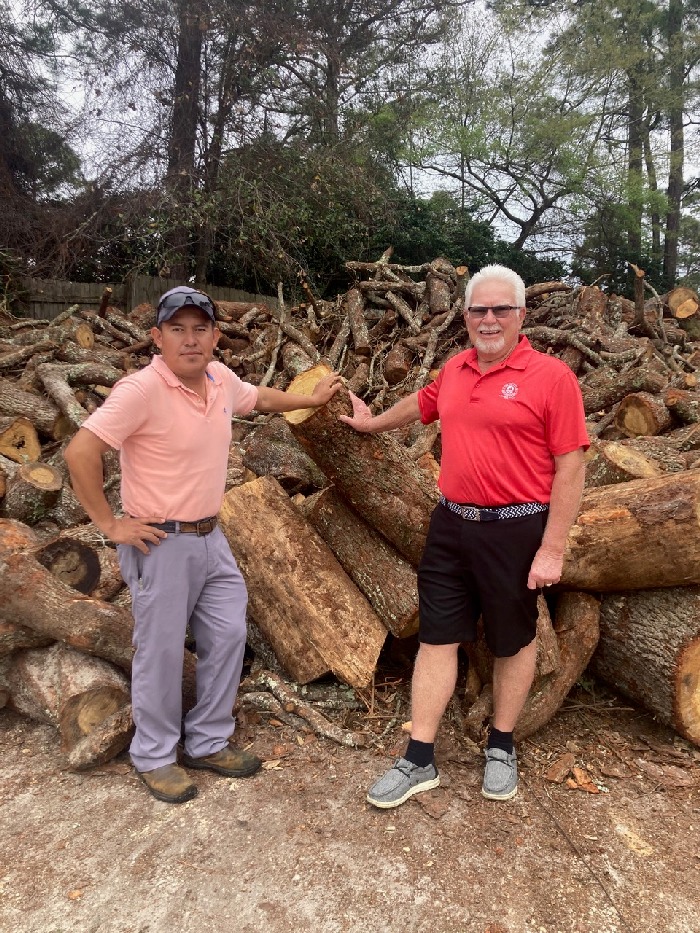
That person is the golf course superintendent. Maligned in the movie Caddyshack, Bill Murray was the hopeless man who spent time chasing a gopher in a war he was never going to win. Unlike Bill, Alfredo Riveras, employee of Elite Golf, the management company for the course, is not chasing gophers or other critters. He’s stockpiling oak. Lots of oak. Oak trees that once drained precious water from the fairways. And he’s winning the battle. If anyone still uses a wood burning fireplace, you may want to contact Alfredo for logs that can be used for your home!
Why is this important? Between the tee box where a golfer hits his or her drive and the green where putts determine the score for the hole, lies the long stretch of fairway. The fairway must be green. Not brown. Not grey. But green. Getting water to this stretch of land is critical. Large trees with roots expanding into the fairway won’t work. A mature oak tree can consume over 40 gallons of water a day during growing season.
And we have a longer growing season in the south. A much longer growing season. This competition for water between turfgrass and tree roots can only end in dry spots on the fairways and golfers who won’t play the course.
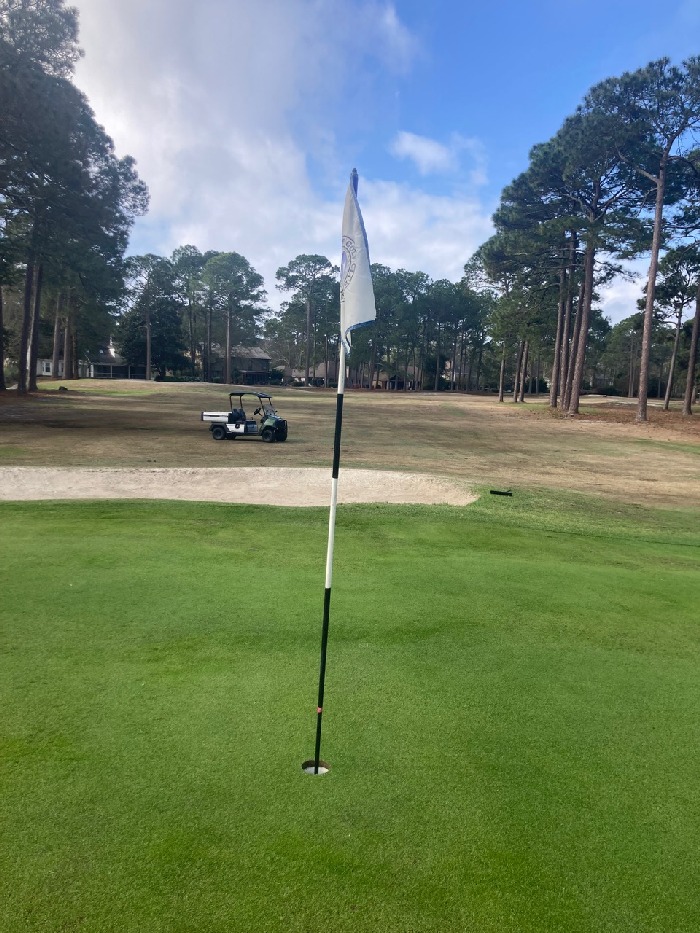
Alredo Riveras was a trusted assistant superintendent working many years in the Dallas area for Elite Golf. Elite Golf selected Alfredo for this new position in Bluewater Bay and Alfredo was the perfect choice to be head course superintendent. Greens that were once brown are now green. Alredo showed me before and after photos. But, I had to know for myself. I walked on these new greens and was amazed. Alfredo knew how to use the right fertilizer, sand, aeration and water to produce what golfers want above all else: perfect greens. Art Jean, one of 330 owners of Preserve Bluewater Bay, the organization who raised funds to save the course two years ago, is proud of Alfredo’s hard work and results. Art had a “I told you so” grin on his face while I took photos of the green.

Alfredo’s crew begins work at 6 a.m. mowing fairways, greens, raking sand traps and preparing for morning golfers. They then tackle other tasks: tree trimming, re-edging greens, maintaining equipment and mowing the rough. Equipment is owned by the course and maintained by a mechanic in the maintenance crew. Golf carts for golfers are leased.
Elite Golf analyzed the course before agreeing to manage the business. In addition to the above improvements for greens and fairways, they wanted greens expanded to the original size of the course designed by Jerry Pate. Elite Golf also wanted certain tee boxes lengthened. Why? Eighteen-hole golf courses should all be a minimum of 6,000 yards for a semi-professional golfer. All the 18-hole courses in our area understand this requirement and offer a series of tee boxes to attract all levels of golfers.
So, keep humming that old familiar tune, knowing now, at Bluewater Bay…
“Green, green, it’s green they say,
On the far side of the hill.
Green, green, we’re hitting our drives,
To where the grass is greener still.”